jun
12
2026
Second consortium meeting of the EyeMatics research network in Münster
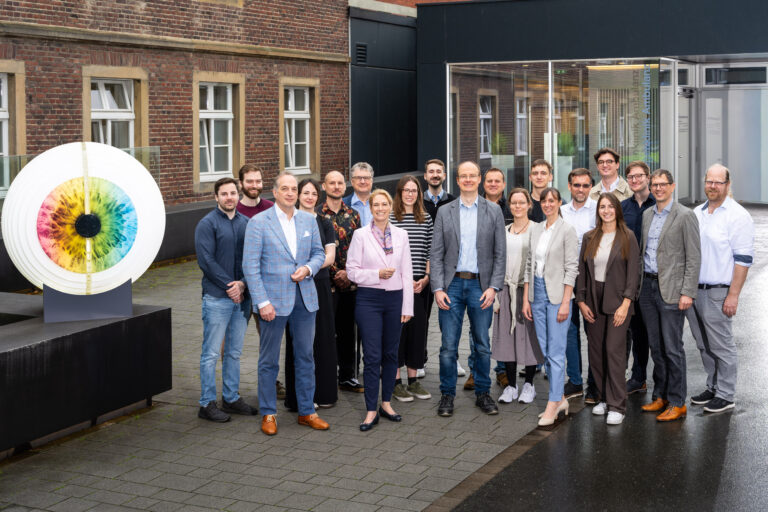
Münster, June 12, 2026 – The second consortium meeting of the EyeMatics research network took place in Münster on June 11–12, 2026. Representatives from the participating sites in Aachen, Chemnitz, Dresden, Greifswald, Leipzig, Mainz, Münster, and Tübingen, as well as representatives of the patient advocacy organization PRO RETINA e.V., attended the meeting.
The EyeMatics research network aims to sustainably improve ophthalmic research and patient care through interoperable medical informatics by establishing a cross-site, data-driven research infrastructure. This infrastructure is designed to enable the structured and interconnected use of clinical data for scientific research, thereby laying the foundation for innovative, data-driven approaches in ophthalmology.
During the consortium meeting, the partners presented significant progress in the development of this interoperable research infrastructure. Key achievements included the establishment of a technical framework for standardized data exchange, incorporating methods for data harmonization and pseudonymization, as well as the development of an ophthalmology-specific extension module for the German Medical Informatics Initiative (MII). Initial test datasets have already been successfully exchanged between several participating institutions.
In addition, the consortium presented a prototype dashboard serving as a demonstrator for future research applications based on the integrated data. The usability of this system will be evaluated in the coming months through comprehensive user testing. Further progress was also reported in the development of AI-based biomarkers. Moreover, the consortium presented the first results from the collection of Patient-Reported Outcome Measures (PROMs), which are being assessed as part of an accompanying validation study.
In addition to highlighting the project’s achievements, the meeting addressed key technical and organizational challenges. Discussions focused on the structured collection of clinical data, regulatory and data protection requirements for operating a multi-center research data infrastructure, and the need to ensure accessibility of clinical systems used for obtaining informed consent and collecting patient-reported outcomes as part of routine clinical care.
The consortium meeting emphasized the strong and productive collaboration among all project partners and provided important momentum for the next phase of the project. The continuous involvement of patient representatives ensures that the developed solutions are not only technologically innovative but also closely aligned with the real-world needs of patients.
Overall, the meeting reaffirmed the shared commitment of all partners to establishing a robust, interoperable research data infrastructure that will sustainably strengthen ophthalmic research and pave the way for future data-driven innovations in eye care